The Truth about Money Printing. Do you want to understand?

After reading the above what do you believe:

  • Interest rates will go up.

    Votes: 7 21.9%
  • The Fed can just keep buying treasuries to infinity

    Votes: 17 53.1%
  • Modern Monetary Theory will fix the problem

    Votes: 2 6.3%
  • The US will default.

    Votes: 11 34.4%

  • Total voters
    32
Warren Buffet said:
“If you print bonds in your own currency, what happens to the currency will be the question,” said Buffett. “But you don’t default. The U.S. has been smart to issue its debt in its own currency.”

Other countries don’t do this, Buffett pointed out.

“Argentina is now having a problem because the debt isn’t in their own currency, and lots of countries have had that problem,” he said. “And lots of competent countries will have that problem in the future.”
 
^^ If I may put on my translators hat again: I think President Trump's point is that when you continually print money, it becomes useless and therefore it isn't able to pay off debt.

If the debt is denominated in USD then USD can always pay it off. Even if the USD has hypothetically become useless.
 
Alan Greenspan said:
[A] government cannot become insolvent with respect to obligations in its own currency. A fiat money system, like the ones we have today, can produce such claims without limit.
 
Nearly all debt and equity liabilities of Australia's governments, corporations and banks, including – crucially – those owed to foreigners, are denominated in, or hedged into, Australian dollars (Graph 1).[1] This includes all Commonwealth and state government debt, which is issued entirely in Australian dollars; Australia's equity liabilities, which are also wholly denominated in Australian dollars; and the bulk of debt issued by banks and other corporations, which is either denominated in Australian dollars or hedged using derivatives.[2] The small share of liabilities that are denominated in foreign currency are likely to have natural hedges, such as foreign currency export earnings or foreign currency-denominated assets (Berger-Thomson and Chapman 2017).

https://www.rba.gov.au/publications/bulletin/2020/mar/the-road-to-australian-dollar-funding.html
 
Unfortunately if it prints to to oblivion it runs out of money anyone will accept. In Argentina they blew up their own currency by printing. As you say they couldn't default but no-one would accept their currency. They had to start using US Dollars for international trade. Then they defaulted on the US Dollar obligations.
This is where you and LEO call "tinpot nation" or "that could never to the USA" or "people are too stupid to stop taking dollars". I don't think so. This can happen in the USA. I think they know it can happen and that is why they wont print to oblivion. But they are going to F it up quite a lot.

As long as America or China produces things the world want's, then people will want USD and CNY. A currency only becomes useless if there is nothing of value you can exchange it for and or if the central bank is so stupid to allow hyperinflation.

This is why the CCP is so desperate for China to produce as much as possible, otherwise the yuan becomes undesirable. The yuan is so fragile that even with China being the biggest producer, they still need to implement capital controls. That goes to show how much more China is printing compared to anyone else.
 
Last edited:
Why the comparison between tinpot nations such as Argentina, Zimbabwe, Greece etc and the US, Australia, the UK etc is not applicable:

To reach the point where widespread funding in domestic currency is feasible, several pre-conditions must be met:

  • investors must be willing to hold assets domiciled in Australia
  • investors must be willing to hold assets denominated in Australian dollars
  • there must exist well-functioning capital and hedging markets, and sound domestic financial institutions, to facilitate the creation and exchange of domestic currency assets.[5]

the-road-to-australian-dollar-funding.html
 
Last edited:
Oh I see what you two are saying. The USA will be the worlds greatest nation forever No matter how it runs it’s economy. It can print to oblivion and all its trading partners will accept its dollars no matter how many they print. So the USA can never default because It won’t ever need to meet its obligations in anything other than printed dollars. Therefore the example of Argentina being forced to meet obligations in a different currency after printing too much of its own... and then defaulting on that foreign currency is irrelevant. What a load of hogwash. The USA and Australia won’t default because they won’t make the mistakes that we are discussing here. No country In history has ever chosen to default they have always been forced into a position where there is no choice.
 
Yes there is a painful process in reducing high inflation, but it can be reversed if a central banks or government desires it. Just like a person addicted to drugs can reduce their addiction, but there is a painful process awaiting them. It's a choice that can be made, providing you don't wait too long where it's become extreme. The USD hasn't got to an extreme point yet and is still withing control of the central bank.

Yes government can curb and reduce inflation but lets be frank. It is not going to happen.

- The game is eroding government ever increasing debt by increasing inflation slow and steady over a long period of time, so by the time you are an old man, or dead you can't complain.
- Ever increasing inflation in turn is increasing revenue in every stream
- In simple terms the world is geared for infinite growth in every sector, something must give eventually, its just a case of when...

No government has volunteered to reducing their size and massively curbed their spending in the history of the world unless huge external pressure was forced on them. (I believe Nixon was once quoted that a government organization once established is eternal)

Its either the US defaults (my opinion less likely)
OR
The fed keeps printing, and prints enough for us to keep us dancing but not to much to cause massive/sudden inflation.

If either happen you know what will happen to precious metals

Timmy
 
The implications of monopoly fiat currency could make it one of the most significant inventions ever.
 
I'm really trying to get into the mind of the pro-MMT ("Monetarist" I believe they call themselves) to see how they can believe in a system which seems so obviously flawed. One of the flaws is summed up in this paragraph from a popular site:

"This is not to say there are no restrictions on government spending.

The constraints become the available real goods and services available for sale, including all the unemployed labour."

I don't understand how this is a real constraint because there is no limit on the price of these good and services. Doesn't the cost of these goods and services increase along with the increase in amount of printed governement funds chasing them?

As a side note, doesn't this effect also mean that private businesses who have to earn money not print it can't compete with the government and private businesses who have government contracts?

It seems to me that the government is no more constrained than I would be if you gave me unlimited funds. Yes there is a limited amount of good and services but I'll just pay more and more for them who cares I have limited funds.
 
I'm really trying to get into the mind of the pro-MMT ("Monetarist" I believe they call themselves) to see how they can believe in a system which seems so obviously flawed. One of the flaws is summed up in this paragraph from a popular site:

I'm really trying to understand why you keep thinking MMT is something new. Most governments have no constraints on spending at this very moment. What about this do you not understand?

I don't think there are many "pro" MMT people, rather there are people describing how the system works now (once you remove the shell games) and how to make the most of it. And again no theory fixes corruption, not the gold standard, crypto standard or any other standard.

As long as there are humans, then any system will have major flaws.
 
I'm really trying to get into the mind of the pro-MMT ("Monetarist" I believe they call themselves) to see how they can believe in a system which seems so obviously flawed.

I'm not pro-MMT, I just believe that it is the best explanation about how a State controlled monopoly fiat currency system operates.

"The constraints become the available real goods and services available for sale, including all the unemployed labour."

I don't understand how this is a real constraint because there is no limit on the price of these good and services. Doesn't the cost of these goods and services increase along with the increase in amount of printed governement funds chasing them?

I guess that it refers to responsible government, say in stark contrast to the tinpot nations mentioned previously. I'll see if Ive got the brains to answer your question. Good luck me. :)

Our modern monetary system is effectively a double entry bookkeeping system where the government sector has liabilities (in name only, they're not actually a liability to the government) in one column, and the non-government sector has an equal amount of assets in the other column. These assets that the non-government sector hold were originally distributed by the government sector and are used to purchase and provide goods and services, or hoarded and invested where they eventually return to the government via bonds or taxed, whereupon the liability is discharged paving the way for more currency to be injected into the non-government sector.

As Bill Mitchell argues (a pro-MMTer) a nation has to have sufficient resources to be prosperous. A nation has to have adequate natural resources, or say in the case of Singapore human resources in order to become prosperous. The proper function of a government of a sovereign nation is to ensure that the nation's resources ie the goods and services it can produce including labour are maximised without the government placing pressure on the cost of these resources. Basically, the State takes up the slack when there are idle resources available in the non-government sector due to a lack of "market demand". One of the metrics is full employment, as well as less than 2% underemployment I think.

The limit is the point at which the actions of the government in stepping in when there is no "market demand" for goods and services begins to damage the non-government sector's capacity and or willingness to utilise those excess resources.

And as @leo25 says, no system solves corruption.
 
I don't think the theory is new I think the serious possibility of it being implemented in our economic system is new. The difference between us is that you believe that the theory has been put into practice already and I do not. Everything I have read on MMT say (and the thing I like least about MMT is) that the debt issuance by government can be done away with. I think you believe that the US government, for example, already has no constraints on its spending because you believe the US treasury it is a puppet of the Fed so the debt bought by the Fed to fund the government is a fiction. That is too much of a leap for me. Especially I do not believe that is the case in Australia.
Probably our concerns in respect of the ultimate consequences are the same, but you believe we are further down this slippery track than me. I don't like what is happening in terms of money printing, but I still hold out hope that the debt may be paid back. Also the fact the debt exists allows either a) rising gov bond interest rates or b) levels of central bank holdings to signal when things have gone too far (even to a blind man) and this may be a bit of a break while the debt exists. At some point I think there will be a reset and a restructuring of all government debt. Even then I doubt gov debt will disappear. That is my good faith explanation.
 
I should say I can understand your point of view. The difference between us may come down to what you believe is the actual motivation of those people running our central banks. Powell I think did believe he could reduce the balance sheet until he actually experienced the cluster fu*& first hand. I don't see a solution other than the fed stopping buying treasuries and the economy taking the interest rate hit.
 
Everything I have read on MMT say (and the thing I like least about MMT is) that the debt issuance by government can be done away with.

It's not really a debt. We go back to the idea that our monetary system is just a double entry bookkeeping system with government liabilities in one column balanced by non-government assets in the other. The government creates a liability when it issues currency. But it's only an accounting liability, it's not say anything like the liabilities you or I hold such as the money we owe on our car or credit card because the government issues the currency, like a tennis umpire awarding points in a game. It doesn't borrow money from anyone else before issuing a bond

When a bond is issued it is bought by an investor or institution and payed for by money already in existence and held as an asset by the non-government sector. So the government doesn't really go into debt when it sells Treasury securities or government bonds, all that happens is that it gets back some of the currency it has issued, it's liability is discharged and it is free to go about issuing more currency if it so desires. The only future debt obligation it has is to pay the interest at the specified points in time, at currently 1.25% in the US, I don't understand yields etc but the cash rate in Oz is currently 0.25%.

The so-called government "debt" is a no-issue to me, it's the power that comes with being able to issue a monopoly fiat currency that is my chief concern.

As far as your assertion that I think the US Treasury is a puppet of The Fed, that is wrong. And it's also not the reason why I find MMT so compelling.
 
Last edited:
Shiney I get that you don’t see it as Debt. But if you bought a treasury or an Australian government bond. You would be lending money that you would expect back. You would expect interest to be paid and you would expect the principal to be returned at maturity just like any debt. The instrument you would receive ie the bond document would be written with all the standard debt instrument terms. So I just call it debt. Obviously when instead of you lending it is the central bank lending then you don’t think of it as debt anymore. But I do as the book entry is the same.

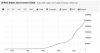
Leo agree that government debt chart is fact. It can’t be argued with and it shows that government debt is increasing at what looks like an unsustainable level. So if there were no debt we would not so easily be able to see this. It is the constraint because it is visible and people can see it and comment on it. We are in the dark if “debt” is gone and no details are available.
 
Last edited:
So if there were no debt we would not so easily be able to see this. It is the constraint because it is visible and people can see it and comment on it. We are in the dark if “debt” is gone and no details are available.

Why do you think it's a constraint if the accounting is visible? It's never acted as a constraint in the past.

The constraint on government spending (or private debt) is not to let the effects of inflation become so noticeable that you end up like Zimbabwe. This was starting to happen during the 1970s until Volcker put on the brakes.
 
Last edited:
Why do you think it's a constraint if the accounting is visible? It's never acted as a constraint in the past.
I think it is very common to hear economists talking about the state of government debt. In the USA there is debt ceiling that paralyses the federal government every few years. In Australia the LNP regularly tries to bring the government accounts into surplus. The media plays a part questioning politicians on debt levels and brings ballooning debt levels to the public attention. If the debt levels are not visible and all we have is governments printing whatever they need this accountability and visibility, which I believe has been a constant constraint in the past is gone.

The constraint on government spending (or private debt) is not to let the effects of inflation become so noticeable that you end up like Zimbabwe. This was starting to happen during the 1970s until Volcker put on the brakes.
Sure that is a constraint too. But when inflation took off lets not forget that Volker achieved the interest rate rises that he needed to control the inflation by withdrawing liquidity the opposite of what is happening today. He sold treasuries and did not roll over maturing treasuries. So debt was required to pull off this trick.
 
Back
Top