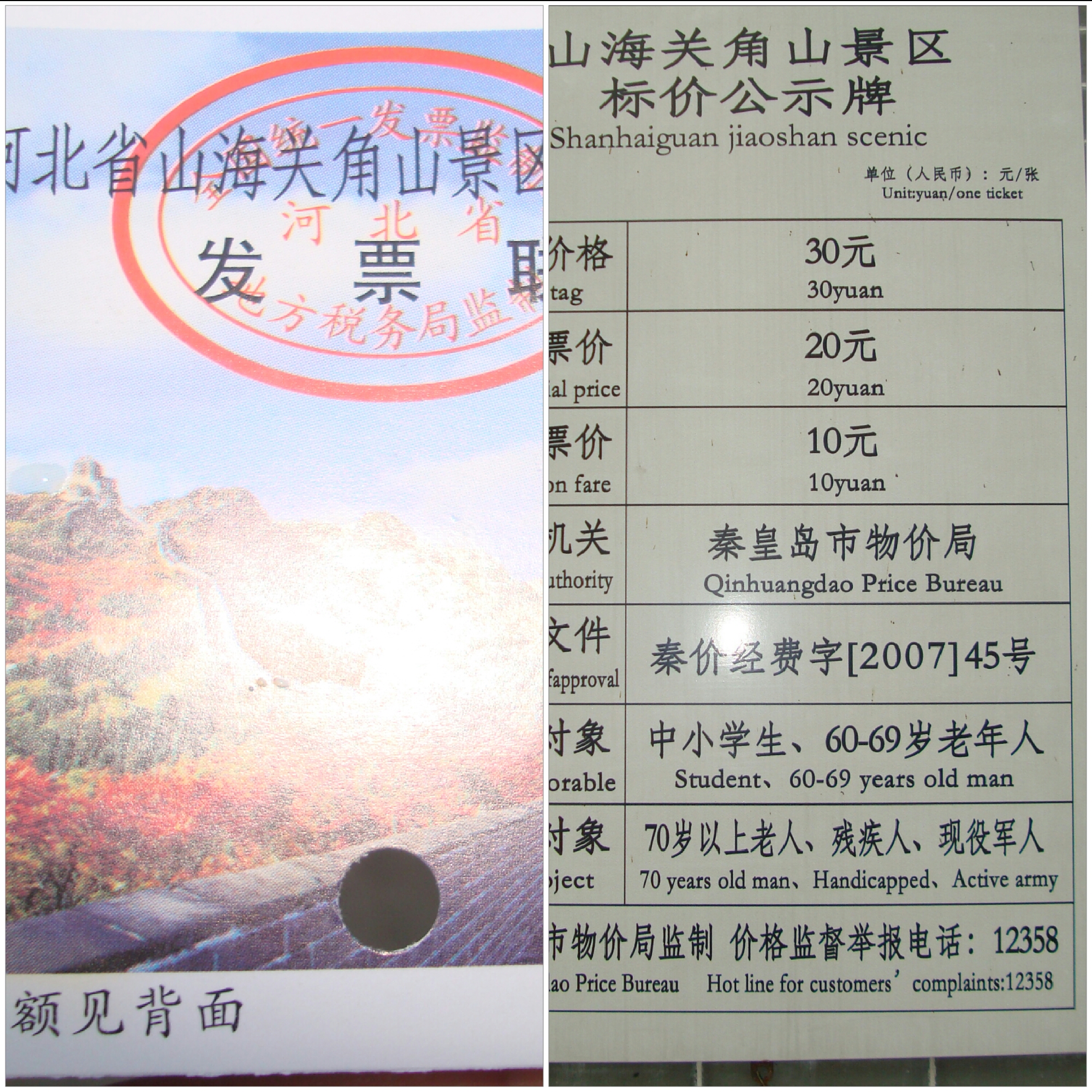
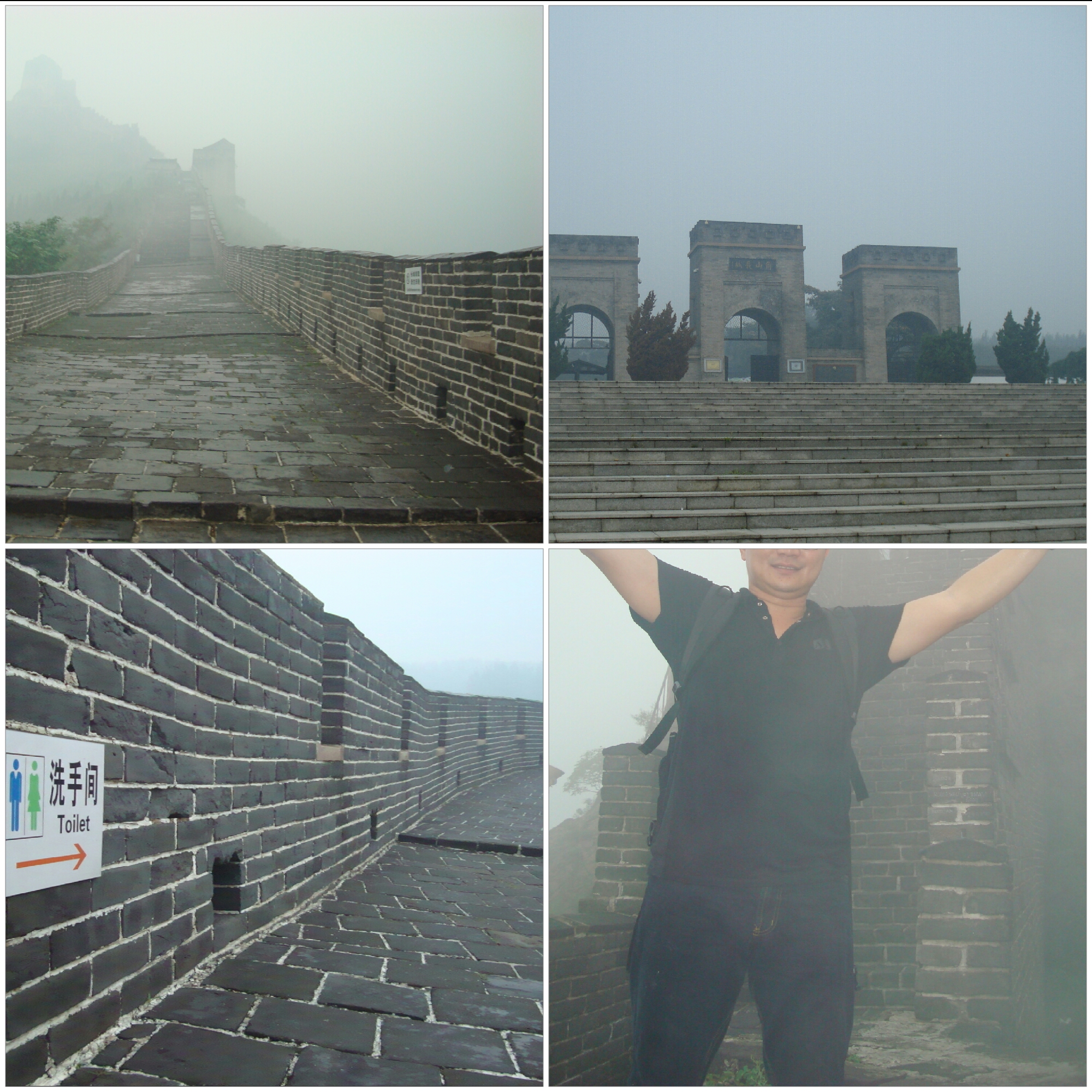
Shanhai Pass , known in Chinese as Shanhaiguan, also called Yu Pass (simplified Chinese: ; traditional Chinese: ; pinyin: Ygun), is one of the major passes in the Great Wall of China. The words "First Pass Under Heaven" (simplified Chinese: ; traditional Chinese: ; pinyin: Tinxi Dy Gun) are engraved above one of the gates and so the site is also known by that name. It is located in Shanhaiguan District, Qinhuangdao, Hebei province. In 1961, the pass became a National Cultural Site of China. It is a popular tourist destination given its situation at the eastern end of the main line of the Ming Dynasty Great Wall. The location where the wall meets the Bohai Sea is nicknamed "Old Dragon's Head." The pass lies nearly 300 kilometres (190 mi) east of Beijing and is linked via the Jingshen Expressway that runs northeastward to Shenyang. Throughout Chinese history, the pass served as a frontline defense against ethnic groups from Manchuria including the Khitan, Jurchen and the Manchus).
Structure
The Shanhai Pass is where the Great Wall of China meets the ocean (at the Bohai Sea).
The Shanhai Pass is built as a square, with a perimeter of around 4 kilometres (2.5 mi). The walls reach a height of 14 metres (46 ft), and are 7 metres (23 ft) thick. The east, south and north sides are surrounded by a deep, wide moat. There are drawbridges over the moat. In the middle of the pass stands a tall bell tower.
All four sides of the Shanhai Pass once possessed a gate or mn (), with the Zhndng Mn () in the East wall, the Yngn Mn ( ) in the West, the Wngyng Mn () in the South and the Wiyun Mn () in the North. Due to lack of repairs over the centuries, only the Zhendong Gate remains today. This was the most important gate due to its position, which faces outside the pass towards Beijing.
SOURCE:
http://en.wikipedia.org/wiki/Shanhai_Pass
.