It’s been a while since I last posted here... it's been good to come back and see the forum refreshed and under new (mystery ) ownership. It feels like the start of a new phase.
I checked back in partly because metals have been on an absolute tear. Prices are moving, sentiment is changing, and this year I’ve started to lighten my load a little. Not exiting, just trimming. Scaling back toward a core position over the months and years ahead rather than holding everything.
That process has forced me to think again about why I hold what I hold, and where I’m willing to take asymmetric risk outside of physical assets. This post is partly that thinking written down, and partly an invitation for others to share projects they think genuinely respect privacy and fungibility. I don’t hold many crypto positions anymore. In fact, the one I share below is the only one that’s remotely significant for me right now, simply because the opportunity feels too skewed to ignore.
Most people who stack gold or silver already understand that money is not just about price. It’s about freedom, control, and the ability to transact without permission. Physical cash and precious metals gave us that for a long time. You can trade directly, without intermediaries, without surveillance, and without leaving a permanent record.
Digital money was supposed to extend that freedom globally. Instead, most public blockchains became a permanent surveillance ledger. Every transaction visible. Every balance traceable. Forever. Where your coins come from is tracked. Who touched them leaves a trail.
That breaks one of the core properties money needs to function properly: fungibility. One unit should equal another unit regardless of history. Once money carries baggage, it stops being neutral. And once money is no longer neutral, it is no longer free.
In the real world, privacy is not radical. It’s normal. Your bank doesn’t publish your transaction history (to everyone ). Your employer doesn’t see where you spend your salary. The retailer doesn’t know where your cash came from. Crypto flipped that expectation and then seemed surprised when adoption didn't take off.
People don’t want their finances broadcast. Businesses can’t operate that way. If crypto is ever going to move beyond gambling on price, privacy has to be the default again, not something you have to opt into or apologise for.
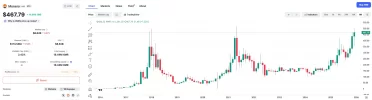
This is where Tari comes in (MinoTari on CMC).
Tari is built with privacy at the protocol level, not bolted on later. Confidential transactions are the default. From the ground up, the assumption is that users should not leak their financial lives just to participate in the network.
That already puts it in a small group, but what makes it more interesting is how it differs from other well-known privacy projects.
Monero is still the gold standard for private digital cash. It does one thing extremely well: private, fungible payments. But Monero is intentionally conservative and not programmable in the modern smart-contract sense. That makes it excellent money, but limits what can be built on top of it.
Zcash took a different path. It introduced powerful cryptography, but privacy is optional. Most transactions remain transparent. That weakens fungibility and turns privacy into a feature rather than a baseline. It's also not programmable.
Tari sits somewhere else entirely. Privacy is default, like Monero, but the roadmap includes a programmable Layer 2 (testnet next quarter). The aim is not just private money, but private applications, private stablecoins, and eventually private payments between autonomous software agents.
Tari’s lead developer is a core contributor to the Monero protocol. These are builders who have already taken an idea from obscurity to real-world use. They understand privacy at a level most projects simply don’t.
Stablecoins are already one of the largest real use cases in crypto... yet almost all of them leak everything. Who paid who. How much. When. Forever. That doesn’t scale to real-world use. It’s a compliance layer disguised as innovation.
A stablecoin that settles confidentially by default changes the equation. It restores what cash used to do, while keeping instant global settlement. That isn’t a niche feature. It’s a prerequisite for mass adoption.
This becomes even more important when you consider what comes next. The next wave of economic activity won’t just be humans. It will be software. AI agents buying data, paying for services, settling invoices, operating continuously in the background.
That brings me to the investment opportunity (maybe better described as speculation ).
All pricing is USD to keep things easier.
Tari’s market cap is roughly $6M. The current price is around $0.002 per token.
At $0.002, $1,000 buys about 500,000 tokens.
If, over time, Tari were to reach a $1B market cap, the price would be around $0.20 assuming a ~5B circulating supply (as a PoW coin, emissions are currently quite high). That’s a 100x from here. $1,000 becomes $100,000. I think Tari has potential to be even larger than this.
That is not a prediction. It’s a scenario. One that requires patience. It could fail. It could take far longer than expected.
But this is what people mean by an asymmetric bet. The downside is capped at what you allocate. The upside, if it works, is many multiples of that. One of the main reasons Tari is priced where it is today has very little to do with the technology itself, and a lot to do with access.
Tari is not yet listed on any major exchanges. Liquidity mostly lives on smaller venues, through mining, or via wrapped versions of the token. That naturally keeps awareness low and friction high, which tends to suppress price regardless of fundamentals.
That is slowly starting to change. Kraken has already added the wrapped version, wXTM, to its public listing roadmap. Wrapped assets are often the first step toward broader exchange support and deeper liquidity. When access improves, the pool of potential buyers expands very quickly.
For anyone who chooses to explore it further, there are currently a few different ways to acquire Tari, each with its own trade-offs:
1. Buy USDT on any exchange. Transfer it to SafeTrade (non-KYC exchange). Purchase XTM (the native token). Then withdraw it to your own wallet using the Tari Universe app. If you self-custody, write down your seed phrase and store it safely. If you lose the seed phrase or share it, the tokens are gone forever.
2. Buy wXTM on Uniswap. This works if you already use an Ethereum wallet. Same rules about seed phrase protection apply.
3. Buy XTM or wXTM on Gate or MEXC. This is the easiest method. Just remember that leaving tokens on exchanges carries risk.
4. Mine Tari slowly over time if you have a gaming PC. You can download Tari Universe and mine directly. This spreads your entry cost out over time, however it would take a long time to acquire a meaningful amount. Software is at tari.com. I have a mini PC with a beefy CPU and it earns 100-200 XTM daily.
I’d be genuinely interested to hear what other privacy-focused projects people here are watching or hold. This just happens to be the only one I currently hold in any size, because the risk-reward at these levels feels, frankly, absurd.
Privacy isn’t a feature. It’s the foundation. And Tari is one of the few projects building as if that is important.
I checked back in partly because metals have been on an absolute tear. Prices are moving, sentiment is changing, and this year I’ve started to lighten my load a little. Not exiting, just trimming. Scaling back toward a core position over the months and years ahead rather than holding everything.
That process has forced me to think again about why I hold what I hold, and where I’m willing to take asymmetric risk outside of physical assets. This post is partly that thinking written down, and partly an invitation for others to share projects they think genuinely respect privacy and fungibility. I don’t hold many crypto positions anymore. In fact, the one I share below is the only one that’s remotely significant for me right now, simply because the opportunity feels too skewed to ignore.
Most people who stack gold or silver already understand that money is not just about price. It’s about freedom, control, and the ability to transact without permission. Physical cash and precious metals gave us that for a long time. You can trade directly, without intermediaries, without surveillance, and without leaving a permanent record.
Digital money was supposed to extend that freedom globally. Instead, most public blockchains became a permanent surveillance ledger. Every transaction visible. Every balance traceable. Forever. Where your coins come from is tracked. Who touched them leaves a trail.
That breaks one of the core properties money needs to function properly: fungibility. One unit should equal another unit regardless of history. Once money carries baggage, it stops being neutral. And once money is no longer neutral, it is no longer free.
In the real world, privacy is not radical. It’s normal. Your bank doesn’t publish your transaction history (to everyone ). Your employer doesn’t see where you spend your salary. The retailer doesn’t know where your cash came from. Crypto flipped that expectation and then seemed surprised when adoption didn't take off.
People don’t want their finances broadcast. Businesses can’t operate that way. If crypto is ever going to move beyond gambling on price, privacy has to be the default again, not something you have to opt into or apologise for.
This is where Tari comes in (MinoTari on CMC).
Tari is built with privacy at the protocol level, not bolted on later. Confidential transactions are the default. From the ground up, the assumption is that users should not leak their financial lives just to participate in the network.
That already puts it in a small group, but what makes it more interesting is how it differs from other well-known privacy projects.
Monero is still the gold standard for private digital cash. It does one thing extremely well: private, fungible payments. But Monero is intentionally conservative and not programmable in the modern smart-contract sense. That makes it excellent money, but limits what can be built on top of it.
Zcash took a different path. It introduced powerful cryptography, but privacy is optional. Most transactions remain transparent. That weakens fungibility and turns privacy into a feature rather than a baseline. It's also not programmable.
Tari sits somewhere else entirely. Privacy is default, like Monero, but the roadmap includes a programmable Layer 2 (testnet next quarter). The aim is not just private money, but private applications, private stablecoins, and eventually private payments between autonomous software agents.
Tari’s lead developer is a core contributor to the Monero protocol. These are builders who have already taken an idea from obscurity to real-world use. They understand privacy at a level most projects simply don’t.
Stablecoins are already one of the largest real use cases in crypto... yet almost all of them leak everything. Who paid who. How much. When. Forever. That doesn’t scale to real-world use. It’s a compliance layer disguised as innovation.
A stablecoin that settles confidentially by default changes the equation. It restores what cash used to do, while keeping instant global settlement. That isn’t a niche feature. It’s a prerequisite for mass adoption.
This becomes even more important when you consider what comes next. The next wave of economic activity won’t just be humans. It will be software. AI agents buying data, paying for services, settling invoices, operating continuously in the background.
That brings me to the investment opportunity (maybe better described as speculation ).
All pricing is USD to keep things easier.
Tari’s market cap is roughly $6M. The current price is around $0.002 per token.
At $0.002, $1,000 buys about 500,000 tokens.
If, over time, Tari were to reach a $1B market cap, the price would be around $0.20 assuming a ~5B circulating supply (as a PoW coin, emissions are currently quite high). That’s a 100x from here. $1,000 becomes $100,000. I think Tari has potential to be even larger than this.
That is not a prediction. It’s a scenario. One that requires patience. It could fail. It could take far longer than expected.
But this is what people mean by an asymmetric bet. The downside is capped at what you allocate. The upside, if it works, is many multiples of that. One of the main reasons Tari is priced where it is today has very little to do with the technology itself, and a lot to do with access.
Tari is not yet listed on any major exchanges. Liquidity mostly lives on smaller venues, through mining, or via wrapped versions of the token. That naturally keeps awareness low and friction high, which tends to suppress price regardless of fundamentals.
That is slowly starting to change. Kraken has already added the wrapped version, wXTM, to its public listing roadmap. Wrapped assets are often the first step toward broader exchange support and deeper liquidity. When access improves, the pool of potential buyers expands very quickly.
For anyone who chooses to explore it further, there are currently a few different ways to acquire Tari, each with its own trade-offs:
1. Buy USDT on any exchange. Transfer it to SafeTrade (non-KYC exchange). Purchase XTM (the native token). Then withdraw it to your own wallet using the Tari Universe app. If you self-custody, write down your seed phrase and store it safely. If you lose the seed phrase or share it, the tokens are gone forever.
2. Buy wXTM on Uniswap. This works if you already use an Ethereum wallet. Same rules about seed phrase protection apply.
3. Buy XTM or wXTM on Gate or MEXC. This is the easiest method. Just remember that leaving tokens on exchanges carries risk.
4. Mine Tari slowly over time if you have a gaming PC. You can download Tari Universe and mine directly. This spreads your entry cost out over time, however it would take a long time to acquire a meaningful amount. Software is at tari.com. I have a mini PC with a beefy CPU and it earns 100-200 XTM daily.
I’d be genuinely interested to hear what other privacy-focused projects people here are watching or hold. This just happens to be the only one I currently hold in any size, because the risk-reward at these levels feels, frankly, absurd.
Privacy isn’t a feature. It’s the foundation. And Tari is one of the few projects building as if that is important.