RBA

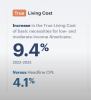
Joseph explains the disparity between the official figures and those of the LISEP in the video. Essentially the official figures measure some 80 000 odd consumer items, most of which lower and middle income households don't buy on a regular basis. LISEP measures the price inflation for the most common goods consumed, which also happen to be the most affected by inflationary pressure, which makes absolute sense from a "supply and demand" perspective.

LISEP Chairman Gene Ludwig. “While the CPI provides a snapshot of price stability, to interpret it as reflective of what the average American household is experiencing is beyond misleading.”

snip

The primary drivers of the TLC increase were significant price spikes in housing, transportation, healthcare, and food, led by an 11.4% increase in housing costs—the largest annual increase on record. Transportation costs rose 14.7% despite lower gasoline prices, due to higher insurance and financing costs. Health insurance premiums increased 7.9%, and food costs rose 4.4%.

https://www.lisep.org/content/every...nflation-according-to-ludwig-institute-report
 
Which then leads on to the efficacy of using cash rates to control inflation.

It doesn't require much insight to work out that when the RBA raises the cash rate ie the risk-free benchmark rate, it impacts the short term money market eg OIS, 30-day interbank cash rate futures and the flow-on effect to lending rates and increases the cost of doing business and mortgage rates, but it doesn't impact the supply of vegetables or milk (unless it forces farmers out of business or encourages business growth) or lower energy prices, rent, health care etc as people still have to eat, drive cars, visit the doctor and so-on - higher rates are not going to lower the cost of housing, cancer treatments or MRI machines. If prices are too high, consumers either suck it up or they shift their preferences, which can then put pressure on those goods, and the wheel continues to turn.

Conventional economic theorists are operating outside of their dumb fucking wheelhouses if they think that manipulating the cash rate has a large impact on anything except money market rates at the short end.
 
Last edited:
Up 4.35%, but still too low considereing how reckless government spending/money creation is.
The cash rate doesn't impact government spending though. And it doesn't impact pressure from immigration, nor shipping in the Strait of Hormuz. It may impact house prices which could reduce credit expansion though.
 
The cash rate doesn't impact government spending though. And it doesn't impact pressure from immigration, nor shipping in the Strait of Hormuz. It may impact house prices which could reduce credit expansion though.
Yes, me out of all people know that interest rates dosn't effect government spending ;)

But government spending and crazy high immigration is causing everyone to have high inflation expectations. Unfortunately the RBA has only one tool to try and reduce people from spending more. Now the government has many tools, but refuce to use any. I partly blame the general public, as they keep asking the government for "free" handouts. Free health care, childcare support, tax breaks, energy subsidies, high wage subsidies etc…….
 
 
@leo25, I understand your point, the more that the Federal government spends on services, the greater the capacity for discretionary spending by households. But at the moment it's not discretionary spending driving inflation, it's the same as during COVID IE supply constraints.
 
@leo25 But at the moment it's not discretionary spending driving inflation, it's the same as during COVID IE supply constraints.
That's not entirely true. Every economist i've listened to and including my own observation, shows inflation in Australia was already accelerating before this Trump/Iran mess started. Trump/Iran just caused it to increase a bit more. But the massive government spending and high immigration is the vast majority of our price inflation.
 
That's not entirely true. Every economist i've listened to and including my own observation, shows inflation in Australia was already accelerating before this Trump/Iran mess started. Trump/Iran just caused it to increase a bit more. But the massive government spending and high immigration is the vast majority of our price inflation.
Well if that's the case higher rates is not going to do an ounce of difference.

Just as it did nothing with the supply constraints caused by the COVID shutdown.
 
Interest rates = control of credit
Tax= control of money supply
Government spending = control of economy
Immigration = control of productivity
The question is not high or low but when and why
 
Like the climate change hoax, it’s to drive new industry because the old one is running out of puf. What’s running out of puf now and how will it affect you?
All the major commonwealth countries are running the same play book.
 
Last edited:
Back
Top