
You are using an out of date browser. It may not display this or other websites correctly.
You should upgrade or use an alternative browser.
You should upgrade or use an alternative browser.
Monitoring the Crypto Bubble
- Thread starter Bullion Baron
- Start date
Friday Afternoon Insight
Two things should be front and centre.
Firstly, the years of semi-hysterical criticism of cryptos in bullion-lovers’ circles have had no basis. Bullion bugs and crypto geeks didn’t need to walk around the mall holding hands, only to recognize a significant sharing of libertarian values.
Secondly, imagine if Ordinary People started insisting that all bullion lovers are scammers and fakers – “Most bullion sold is fake. It’s lead sprayed with silver paint!”
So, there are classes of crypto geeks. The long-timers have indeed been bullied from pillar to post by nonsense like Tether. But those long-timers – mostly based in 1.0 cryptos – understand that SBF and FTX are just the latest episode of the crypto journey.
Now here’s the punchline:
bullion bugs have resolutely looked at cryptos in a back to front manner. It’s all “crypto bubble!!” and “no intrinsic value!!” But if you stop willingly looking at It All back to front, you see that Bitcoin was <$200 in May, 2013 (when I started) and even if we go to an 85% retracement this time – say, $12k – that’s better than a poke in the eye with a sharp stick.
Bullion bugs ARE folks who really understand how rickety the global system is. So, deep breath:
no one is twisting your arm to buy BTC. And if you lost money on Supa SBF-FTX DEFI Mania Inc., I got no sympathy for you.
Try sitting back and just watching how this technology fares in its struggle against Guvvy Corp.
Two things should be front and centre.
Firstly, the years of semi-hysterical criticism of cryptos in bullion-lovers’ circles have had no basis. Bullion bugs and crypto geeks didn’t need to walk around the mall holding hands, only to recognize a significant sharing of libertarian values.
Secondly, imagine if Ordinary People started insisting that all bullion lovers are scammers and fakers – “Most bullion sold is fake. It’s lead sprayed with silver paint!”
So, there are classes of crypto geeks. The long-timers have indeed been bullied from pillar to post by nonsense like Tether. But those long-timers – mostly based in 1.0 cryptos – understand that SBF and FTX are just the latest episode of the crypto journey.
Now here’s the punchline:
bullion bugs have resolutely looked at cryptos in a back to front manner. It’s all “crypto bubble!!” and “no intrinsic value!!” But if you stop willingly looking at It All back to front, you see that Bitcoin was <$200 in May, 2013 (when I started) and even if we go to an 85% retracement this time – say, $12k – that’s better than a poke in the eye with a sharp stick.
Bullion bugs ARE folks who really understand how rickety the global system is. So, deep breath:
no one is twisting your arm to buy BTC. And if you lost money on Supa SBF-FTX DEFI Mania Inc., I got no sympathy for you.
Try sitting back and just watching how this technology fares in its struggle against Guvvy Corp.

Friday Afternoon Insight
Two things should be front and centre.
Firstly, the years of semi-hysterical criticism of cryptos in bullion-lovers’ circles have had no basis. Bullion bugs and crypto geeks didn’t need to walk around the mall holding hands, only to recognize a significant sharing of libertarian values.
Secondly, imagine if Ordinary People started insisting that all bullion lovers are scammers and fakers – “Most bullion sold is fake. It’s lead sprayed with silver paint!”
So, there are classes of crypto geeks. The long-timers have indeed been bullied from pillar to post by nonsense like Tether. But those long-timers – mostly based in 1.0 cryptos – understand that SBF and FTX are just the latest episode of the crypto journey.
Now here’s the punchline:
bullion bugs have resolutely looked at cryptos in a back to front manner. It’s all “crypto bubble!!” and “no intrinsic value!!” But if you stop willingly looking at It All back to front, you see that Bitcoin was <$200 in May, 2013 (when I started) and even if we go to an 85% retracement this time – say, $12k – that’s better than a poke in the eye with a sharp stick.
Bullion bugs ARE folks who really understand how rickety the global system is. So, deep breath:
no one is twisting your arm to buy BTC. And if you lost money on Supa SBF-FTX DEFI Mania Inc., I got no sympathy for you.
Try sitting back and just watching how this technology fares in its struggle against Guvvy Corp.
So he’s in for 12k!?

https://coinmarketcap.com/currencies/groestlcoin/
Check the BTC price of the 1Y chart. And forget about Bitcoin's $ price. Suppose you are just a hobbyist, and you never put more than say $250 of coin on any exchange. If Bitcoin price be big, small amount of coin on each exchange. If Bitcoin
price be small, you can trade 'bigger' but with the same $$ exposure.
Check the BTC price of the 1Y chart. And forget about Bitcoin's $ price. Suppose you are just a hobbyist, and you never put more than say $250 of coin on any exchange. If Bitcoin price be big, small amount of coin on each exchange. If Bitcoin
price be small, you can trade 'bigger' but with the same $$ exposure.
Last edited:
https://coinmarketcap.com/currencies/groestlcoin/
Check the BTC price of the 1Y chart. And forget about Bitcoin's $ price. Suppose you are just a hobbyist, and you never put more than say $250 of coin on any exchange. If Bitcoin price be big, small amount of coin on each exchange. If Bitcoin
price be small, you can trade 'bigger' but with the same $$ exposure.
My problem wasn’t making the money, especially in 2014 altcoins (Mintpal was the bomb!). The problem was keeping it. What was I 23 or 24 struggling living away from home and without a financial education. So alas after blowing more money than I usually make in a year (now) on a number of unmentionables and keeping away from the market since, I’m mentally ready to start ‘wealth building’ at this point.
And hey after emerging from that I’m glad I focused on what I deem most important - health, family, skills and relationships. When you don’t have those and are chasing dollars around life is an absolute shit-show I can vouch for that.
Last edited:

Friday Afternoon Insight
Try sitting back and just watching how this technology fares in its struggle against Guvvy Corp.
Great Friday Afternoon Insight, and I agree with everything wholeheartedly, except with slight reservation to your last sentence (above). In my view the Gubmint is already inside, the "struggle" is all but over.
"
At the peak of the Ponzi scheme, Bankman-Fried’s net worth reached $26 billion. How did he do it? And how so fast? Bankman-Fried’s father is a Stanford professor who habitually lobbies Congress on behalf of hedge fund interests and drafted tax legislation for Elizabeth Warren. His mother is also a Standford professor who advocates for “distributive justice” and “feminist class politics.” She co-founded the Mind the Gap super PAC, which solicits funds from Silicon Valley executives to fund radically left-wing Democratic political candidates. His aunt is a member of the World Economic Forum.
Bankman-Fried quickly amassed enough cash to exert his own political influence: his $5 million donation to the 2020 Biden campaign was the largest save for Bloomberg’s, and his $40 million donation to the Democrats for the 2022 mid-term elections was second only to Soros.
The Bankman-Fried family, deeply entrenched Democrat party players, were able to entice other network operatives to join. Bankman-Fried lured Sullivan & Cromwell partner Ryne Miller to be general counsel; Miller had been legal counsel to Gary Gensler when he was chairman of the CFTC. Obama’s CFTC Commissioner Mark Wetjen joined FTX as Head of Policy and Regulatory Strategy. Wetjen in turn hired another former CFTC commissioner, Jill Sommers, for the FTX US Derivatives board.
His government contacts and donations allowed him to start bidding on sovereign business: reports indicate that Ukraine deposited a considerable sum of the foreign aid from the U.S. into FTX, which then funneled part of it back to Democratic politicians. His political allies also arranged invitations to appear on Capitol Hill. On February 9, 2022, Bankman-Fried testified in the Senate:
This patchwork of regulations . . . reveals gaps in federal market oversight due to the interplay of the CFTC and SEC regimes . . . [and] there is no clear market oversight for spot trading of (non-security) digital commodities....
spot transactions . . . ensure the safety and soundness of stablecoins . . . [and] adequately fund the CFTC to ensure resources to protect digital- asset investors.1"
It may seem strange that the head of a firm dedicated to housing and trading assets billed as an escape from government-sponsored fiat currency would invite regulation, until one reads last week’s announcement by Congressman Tom Emmer: “Reports to my office allege he [Gary Gensler] was helping SBF and FTX work on legal loopholes to obtain a regulatory monopoly. We’re looking into this.”2
Suddenly, the play, the political patronage, the marquee investors, the overnight success, it all makes sense: in addition to his Ponzi, Bankman-Fried was constructing a “regulatory monopoly,” and everyone wanted a piece.
"
https://www.myrmikan.com/pub/Myrmikan_Research_2022_11_15.pdf
'In my view the Gubmint is already inside, the "struggle" is all but over.'
Your point is a very very good one, j.!!
Here, in brief, are The Positive Points:
exchanges are not cryptos
Lots of the world is not the regulated west
If folks are squeezed hard enough, they can/will use cryptos P2P.
Your point is a very very good one, j.!!
Here, in brief, are The Positive Points:
exchanges are not cryptos
Lots of the world is not the regulated west
If folks are squeezed hard enough, they can/will use cryptos P2P.
Selfwithin 3k
CanGjie 32,999
GreenPanda 23,420.69
AKKPP $25,000
Bitcoin Black Cab 21,887.27
Bay Area Coins 32,000
Aztek Btc: 36,530
Craig V 23,400
Laser Gun 24,000
Z 25,000
Pirate: 42,069.69 Sx tb
BIG_CHUNGUS: 649.30 Sx tb
Pana 40,000
IndiaMikeZulu 22,001
Ngalim 16,342
Amaan 16,700
Evalucratie 32,000
FallingKnife 21,100
Plastic-Pleasure-207 20,850 QRL
‘Jackie’ TGRAM GRS 13,500
Paul 22,000
Belovachap 18,000
Z 18,250
Jordgubbar 20,000
Dirkmirk 11,500
backpacker 9.001
Doug 28,422.67
Peerchemist 8,342.01
‘peer’ 69,420 (Tgram PPC?)
wedgietime 19,848
Elidian 14,800
Cybnate 14,500
JohnnyBravo300 (SS) 12,000
CryptoFool 19,400
AxAi 19,700
MattLM 17,000
Markcoinoz 19,600 (SS)
Sammysilver 6,000 (SS)
Heartastack (SS) 14,500
RICH Ward 12,750
Dozerz 17,869 (SS)
mmm…shiney 16,732 (SS)
Polar.Bear.Stacker 15,000 (SS)
Neonuke 13,500 (SS)
Sparky044 13,000
L.H. 19,540
Alpha 137 15,576
Mister_JamBone 15,768.27 Sx tb
Yokomoko 15,428
TrippyMcFlip 14,500 QRL
CanGjie 32,999
GreenPanda 23,420.69
AKKPP $25,000
Bitcoin Black Cab 21,887.27
Bay Area Coins 32,000
Aztek Btc: 36,530
Craig V 23,400
Laser Gun 24,000
Z 25,000
Pirate: 42,069.69 Sx tb
BIG_CHUNGUS: 649.30 Sx tb
Pana 40,000
IndiaMikeZulu 22,001
Ngalim 16,342
Amaan 16,700
Evalucratie 32,000
FallingKnife 21,100
Plastic-Pleasure-207 20,850 QRL
‘Jackie’ TGRAM GRS 13,500
Paul 22,000
Belovachap 18,000
Z 18,250
Jordgubbar 20,000
Dirkmirk 11,500
backpacker 9.001
Doug 28,422.67
Peerchemist 8,342.01
‘peer’ 69,420 (Tgram PPC?)
wedgietime 19,848
Elidian 14,800
Cybnate 14,500
JohnnyBravo300 (SS) 12,000
CryptoFool 19,400
AxAi 19,700
MattLM 17,000
Markcoinoz 19,600 (SS)
Sammysilver 6,000 (SS)
Heartastack (SS) 14,500
RICH Ward 12,750
Dozerz 17,869 (SS)
mmm…shiney 16,732 (SS)
Polar.Bear.Stacker 15,000 (SS)
Neonuke 13,500 (SS)
Sparky044 13,000
L.H. 19,540
Alpha 137 15,576
Mister_JamBone 15,768.27 Sx tb
Yokomoko 15,428
TrippyMcFlip 14,500 QRL

TreasureHunter
Well-Known Member
The 2018 bubble was way bigger than the 2019-2020 bubble.
If it goes down below 10 k, then that proves Bitcoin is a terrible investment. But a great tulip-bubble ride, if you catch the low points.
No matter what Michael Saylor says ("you don't understand Bitcoin bla bla bla..."), the key is still TIMING. If you got on the ride at the right time, you win. Otherwise it's crash 'n' burn.
If it goes down below 10 k, then that proves Bitcoin is a terrible investment. But a great tulip-bubble ride, if you catch the low points.
No matter what Michael Saylor says ("you don't understand Bitcoin bla bla bla..."), the key is still TIMING. If you got on the ride at the right time, you win. Otherwise it's crash 'n' burn.

Sammy still not in cuffs somehow?

That talk scares me. I keep looking over my shoulder!Sammy still not in cuffs somehow?

What's that Buffet quote again?
https://www.msn.com/en-us/money/mar...-bitcoin-trust-at-record-discount/ar-AA14pUHa
Cathie Wood's ARK Buys $1.5M of Shares in Grayscale's Bitcoin Trust at Record Discount
Cathie Wood's ARK Investment Management bought another 176,945 shares ($1.46 million) in Grayscale's Bitcoin Trust (GBTC) on Monday as the crypto market slumped to a two-year low.
The purchase comes as GBTC shares trade at a record 45% discount to net asset value (NAV) as negative sentiment continues to spread following the collapse of FTX.
ARK also purchased 315,259 shares worth $2.8 million of GBTC, last week as it continues to double down in the ongoing bear market. The investment firm now holds 6.357 million GBTC shares worth $53 million.
https://www.msn.com/en-us/money/mar...-bitcoin-trust-at-record-discount/ar-AA14pUHa
'Cathie Wood's ARK Investment Management bought another 176,945 shares ($1.46 million) in Grayscale's Bitcoin Trust (GBTC) on Monday as the crypto market slumped to a two-year low.'
The question, shiney, is easy: Are you sure that Bitcoin will never ever again rise again in price to, say, $US20k?
[Is this Cathie person a member here? Has she posted her bid for the Guessing Comp?]
The question, shiney, is easy: Are you sure that Bitcoin will never ever again rise again in price to, say, $US20k?
[Is this Cathie person a member here? Has she posted her bid for the Guessing Comp?]
The question, shiney, is easy: Are you sure that Bitcoin will never ever again rise again in price to, say, $US20k?
That's why that Warren Buffet quote came to mind: “fearful when others are greedy, and greedy when others are fearful." Is that what she's doing or is she taking a huge risk on Galaxy turning their fortunes around?
Galaxy had funds with FTX, I'm not sure how much they lost. Regarding FTX Novogratz said:
Mike Novogratz said:"This is a very young and new industry and part of the growing pains is weeding out the bad actors, the excesses, and pivoting towards something that's more trusted," Galaxy Digital Founder and CEO Mike Novogratz said on the company's earnings call.
Bad actors, excesses and pivoting toward something more trusted? Is Mike telling us that he's only just realised that FTX were fraudulent or is he saying he had some idea. If he had no idea then Wood has to be confident that Novogratz won't fall for another scam again IMO.
I'm sure BTC will rise again but I don't know when. I'm less confident regarding GLXY's ability to offer a sound product to consumers based on their track record around FTX. That may be unfair though, but I'm not touching GLXY and I never have.
Last edited:
TreasureHunter
Well-Known Member
The mega problem with crypto is that the giant companies and financial institutions are in it (including people like Michael Saylor) and are pulling the strings.
So, the globalists, the giant companies are manipulating and pulling the entire market in the direction in which they want. Scams, sell-offs by the giants is what creates these tremendous crashes.
FTX was a scam fed by political interests and I heard they even had relations with the WEF.
What I want to say is that the crypto environment is indeed mostly Peer to Peer, BUT some of those peers are ELEFANTS
Since the giant globalists and mega companies are sh*tting inside the house, the small people must run outside.
They are in it everywhere!
So, the globalists, the giant companies are manipulating and pulling the entire market in the direction in which they want. Scams, sell-offs by the giants is what creates these tremendous crashes.
FTX was a scam fed by political interests and I heard they even had relations with the WEF.
What I want to say is that the crypto environment is indeed mostly Peer to Peer, BUT some of those peers are ELEFANTS
Since the giant globalists and mega companies are sh*tting inside the house, the small people must run outside.
They are in it everywhere!
' I'm less confident regarding GLXY's ability to offer a sound product to consumers based on their track record around FTX. That may be unfair though, but I'm not touching GLXY and I never have'
Oh heck, Shiney. My mob has hardly ever moved beyond basic trading. No EFTs, air drops, ICOs, blah blah.
Oh heck, Shiney. My mob has hardly ever moved beyond basic trading. No EFTs, air drops, ICOs, blah blah.
Selfwithin 3k
CanGjie 32,999
GreenPanda 23,420.69
etc etc etc
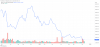
Is this BTC resilience again or hopium? And has the next FOMC move been priced in or not?
Regarding your price predictions, where do some of your friends from other forums get their ideas from? "Pirate" BTC = over $42G????????????? Dafuq?

'Regarding your price predictions, where do some of your friends from other forums get their ideas from?' Isn't it wonderful, shiney!!
Some of these guys are real long-timers. Some are unknowns from troll boxes.
Every year, we've had a ludicrously broad range of Guesses.
[Green Panda won two years ago.]
Some of these guys are real long-timers. Some are unknowns from troll boxes.
Every year, we've had a ludicrously broad range of Guesses.
[Green Panda won two years ago.]