
You are using an out of date browser. It may not display this or other websites correctly.
You should upgrade or use an alternative browser.
You should upgrade or use an alternative browser.
AUD7,500.00 Au oz....pick a date
- Thread starter Oddjob
- Start date

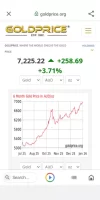


Nice pick... back in Oct no less.January 2026....
Keep an eye out 'cos shes coming.

Already 7500+

madaw1
Well-Known Member
Bingo today....January 2026....
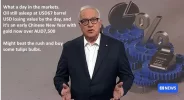

The USD has been the world's dominant reserve currency for decades, but cracks are showing—much like what happened to previous empires.
History tells us these shifts happen gradually, driven by debt, inflation, and rivals stepping up. Here's a smoother rundown of the key evidence right now, and why it matters for us stackers Down Under.
First, the US national debt is exploding. As of early January 2026, it's sitting at around $38.43 trillion, up $2.25 trillion from just a year ago—that's roughly $8 billion added every single day. This level of borrowing echoes the overreach that weakened past reserve currencies like the British pound after the world wars.Second, global confidence is slipping.
The USD's share of world central bank reserves has fallen to about 57% (down from over 70% in the late 1990s), the lowest since the mid-1990s. Countries are quietly diversifying—more yuan, euros, and especially hard assets.
That's where gold comes in: Central banks are buying aggressively. They scooped up 297 tonnes in the first 11 months of 2025 alone, with strong momentum carrying into 2026. "This isn't speculation"—it's strategic hedging against fiat risks, and it supports the whole precious metals space, including silver.
For us in Australia, the USD's wobbles often mean upside for silver in AUD terms. Spot silver is hovering around $150–160 AUD per ounce right now (with some volatility), while gold has pushed past $5,250 USD/oz and keeps climbing.
As the greenback faces pressure from debt and de-dollarization, silver's industrial demand plus its monetary appeal could see solid gains—perfect for hedging inflation and currency shifts here at home.
The USD isn't vanishing overnight, but these trends are real and accelerating. Stacking more physical silver (or gold) is one of the smartest ways to protect wealth when fiat systems show strain.
Cheers H
History tells us these shifts happen gradually, driven by debt, inflation, and rivals stepping up. Here's a smoother rundown of the key evidence right now, and why it matters for us stackers Down Under.
First, the US national debt is exploding. As of early January 2026, it's sitting at around $38.43 trillion, up $2.25 trillion from just a year ago—that's roughly $8 billion added every single day. This level of borrowing echoes the overreach that weakened past reserve currencies like the British pound after the world wars.Second, global confidence is slipping.
The USD's share of world central bank reserves has fallen to about 57% (down from over 70% in the late 1990s), the lowest since the mid-1990s. Countries are quietly diversifying—more yuan, euros, and especially hard assets.
That's where gold comes in: Central banks are buying aggressively. They scooped up 297 tonnes in the first 11 months of 2025 alone, with strong momentum carrying into 2026. "This isn't speculation"—it's strategic hedging against fiat risks, and it supports the whole precious metals space, including silver.
For us in Australia, the USD's wobbles often mean upside for silver in AUD terms. Spot silver is hovering around $150–160 AUD per ounce right now (with some volatility), while gold has pushed past $5,250 USD/oz and keeps climbing.
As the greenback faces pressure from debt and de-dollarization, silver's industrial demand plus its monetary appeal could see solid gains—perfect for hedging inflation and currency shifts here at home.
The USD isn't vanishing overnight, but these trends are real and accelerating. Stacking more physical silver (or gold) is one of the smartest ways to protect wealth when fiat systems show strain.
Cheers H

Golden Phoenix
New Member
Today over $7,650, actually this is getting scary...... nice and slow is much better for us all.

The silver and gold prices have indeed been on a massive tear in early 2026, with gold surging past $7880-ish AUD per ounce and silver exploding even faster—often described as "gold on steroids"—to record levels of $168-ish AUD per ounce in recent sessions, including sharp daily moves.This isn't isolated to just "today" (January 29, 2026), but reflects an ongoing parabolic rally
Guys, here's a list of 10 key examples of why these precious metals have exploded higher recently:
If you're tracking this closely, markets can shift quickly—always do your own research!
Bitcoin remains in a sideways pattern of about $89,000 USD
Guys, here's a list of 10 key examples of why these precious metals have exploded higher recently:
- Intensifying geopolitical uncertainty and tensions — Escalating global conflicts, U.S. foreign policy moves (e.g., threats involving tariffs on allies like Canada/South Korea, Greenland annexation push, Venezuela operations, and Iran tensions) have driven massive safe-haven buying into gold and silver.
- Renewed fears of trade wars and tariffs — President Trump's aggressive tariff announcements (e.g., on South Korean imports, potential 100% on Canada over China deals, and broader trade disruptions) are raising concerns about global supply chains, inflation, and economic instability, boosting precious metals as hedges.
- Weakening U.S. dollar — A sharp decline in the USD (to multi-year lows in some metrics) makes dollar-priced gold and silver cheaper for foreign buyers and fuels the "debasement trade" as investors diversify away from the currency.
- Persistent inflation worries and sticky inflation — Despite some cooling, inflation remains elevated, and precious metals serve as classic inflation hedges, especially with concerns about government debt and policy impacts.
- Safe-haven demand amid economic and policy uncertainty — Broader fears of U.S. government shutdown risks (e.g., funding deadlines), Fed independence questions, and erratic policy-making have pushed investors toward gold/silver as reliable stores of value.
- Strong central bank purchases and de-dollarization — Global central banks (especially in China, India, etc.) continue record buying to diversify reserves away from the USD, providing structural support and reducing available supply.
- Industrial demand surge for silver — Silver's dual role shines here—exploding use in solar panels, EVs, electronics, AI data centers, and electrification has created structural deficits (demand outstripping mine supply for years), amplifying price gains beyond gold's moves.
- Speculative and momentum-driven flows — FOMO (fear of missing out), retail investor hype, ETF inflows, and thin market liquidity have turned modest buying into outsized rallies, with silver particularly volatile and amplified.
- Lower or stable interest rates environment — Fed holding or cutting rates (with expectations of more easing) reduces the opportunity cost of holding non-yielding assets like gold/silver, making them more attractive versus bonds or cash.
- Broader market anxiety and diversification trends — Investors are piling into hard assets amid stock market volatility, potential slowdown fears, and a shift away from traditional financial systems—gold as the ultimate safe haven, silver as an amplified play on both safety and industrial growth.
If you're tracking this closely, markets can shift quickly—always do your own research!
Bitcoin remains in a sideways pattern of about $89,000 USD
Projecting trading targets guys, DYODD - Best of Luck.
- Short-Term Dead Cat Bounce Target (February 2–4, 2026): Expect a potential oversold relief rally early week (Monday–Wednesday) as trading commences, targeting A$130–A$135 per oz. This could be the "bounce" from current ~A$122.62, drawing in buyers before failing—sell or short near here if momentum fades.
- Near-Term Fib Support Test (February 5–10, 2026): If the bounce fails, look for a drop to the 50% Fib retracement at ~A$109.59 per oz. This is a psychological midpoint—possible buy entry if it holds, but breach could accelerate lower.
- Deeper Correction Target (February 11–20, 2026): Continuation of downtrend post-bounce, targeting the 61.8% "golden" Fib at ~A$94.90 per oz. Strong support under A$100—attractive for dip-buyers if oversold conditions persist, assuming fundamentals (supply deficits) remain intact.
- Extreme Pullback Scenario (Late February–Early March 2026): Worst-case extension to 78.6% Fib at ~A$73.90 per oz. This would be capitulation territory under A$100—high-risk buy only if reversal signals (e.g., volume spike) emerge, but could mark the bottom before resumption.
betterinvestmentthanshare
Well-Known Member
Simon Hunt has been predicting a 2026 gold pull back to $4000usd before it skyrockets back up surpassing ATH for quite sometime now.
....
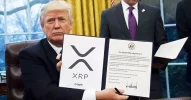
Trump has signed an Executive Order 589 ( The Ripple Effect Agreement ) making XRP the Reserve Currency of the USA ? and possibly the new Reserve Currency of Planet Earth ?
Seems the USD may no longer the reserve currency of the USA ?The USD has been the world's dominant reserve currency for decades, but cracks are showing—much like what happened to previous empires.
History tells us these shifts happen gradually, driven by debt, inflation, and rivals stepping up. Here's a smoother rundown of the key evidence right now, and why it matters for us stackers Down Under.
First, the US national debt is exploding. As of early January 2026, it's sitting at around $38.43 trillion, up $2.25 trillion from just a year ago—that's roughly $8 billion added every single day. This level of borrowing echoes the overreach that weakened past reserve currencies like the British pound after the world wars.Second, global confidence is slipping.
The USD's share of world central bank reserves has fallen to about 57% (down from over 70% in the late 1990s), the lowest since the mid-1990s. Countries are quietly diversifying—more yuan, euros, and especially hard assets.
That's where gold comes in: Central banks are buying aggressively. They scooped up 297 tonnes in the first 11 months of 2025 alone, with strong momentum carrying into 2026. "This isn't speculation"—it's strategic hedging against fiat risks, and it supports the whole precious metals space, including silver.
For us in Australia, the USD's wobbles often mean upside for silver in AUD terms. Spot silver is hovering around $150–160 AUD per ounce right now (with some volatility), while gold has pushed past $5,250 USD/oz and keeps climbing.
As the greenback faces pressure from debt and de-dollarization, silver's industrial demand plus its monetary appeal could see solid gains—perfect for hedging inflation and currency shifts here at home.
The USD isn't vanishing overnight, but these trends are real and accelerating. Stacking more physical silver (or gold) is one of the smartest ways to protect wealth when fiat systems show strain.
Cheers H
Trump has signed an Executive Order 589 ( The Ripple Effect Agreement ) making XRP the Reserve Currency of the USA ? and possibly the new Reserve Currency of Planet Earth ?

....
Seems the USD may no longer the reserve currency of the USA ?
Trump has signed an Executive Order 589 ( The Ripple Effect Agreement ) making XRP the Reserve Currency of the USA ? and possibly the new Reserve Currency of Planet Earth ?
Can you please elaborate? Here's all google has on Executive Order 589
"Executive Order 589, issued on March 14, 1907, restricted Japanese and Korean laborers from entering the continental United States, significantly impacting immigration policies of the time." Doesn't seem relevant?
Picture looks fake also?

Cat Little
Active Member
Looks like fake news to me. Having said that Ripple and XRP are lining up some big moves in this area and are vying to be America's stable coin of choice going forwards as well as lobbying governments around the world including Australia. Ripple was just awarded a licence to become a trust bank:
https://occ.gov/news-issuances/news-releases/2025/nr-occ-2025-125b.pdf
But how this will all play out with the genius act and other legislation Trump is doing building a strategic crypto reserve etc I'm not sure.
https://occ.gov/news-issuances/news-releases/2025/nr-occ-2025-125b.pdf
But how this will all play out with the genius act and other legislation Trump is doing building a strategic crypto reserve etc I'm not sure.
betterinvestmentthanshare
Well-Known Member
Simon Hunt has been predicting a 2026 gold pull back to $4000usd before it skyrockets back up surpassing ATH for quite sometime now.
Here we go?
Are we about to see ATH again