16th largest bank in America
https://www.netinterest.co/p/the-de...ource=direct&utm_campaign=post&utm_medium=web
Driven by the boom in venture capital funding, many of Silicon Valley’s customers became flush with cash over 2020 and 2021.
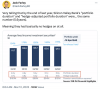
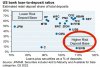
Between the end of 2019 and the first quarter of 2022, the bank’s deposit balances more than tripled to $198 billion (including a small acquisition of Boston Private Financial Holdings). This compares with industry deposit growth of “only” 37% over the period. Around two-thirds of the deposits were non-interest-bearing demand deposits and the rest offered a small rate of interest. All-in, at the end of 2022, the cost of Silicon Valley’s deposits was 1.17% (up from 0.04% at the end of 2021).
The bank invested the bulk of these deposits in securities.
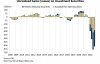
It adopted a two-pronged strategy: to shelter some of its liquidity in shorter duration available-for-sale securities, while reaching for yield with a longer duration held-to-maturity book. On a cost basis, the shorter duration AFS book grew from $13.9 billion at the end of 2019 to $27.3 billion at its peak in the first quarter of 2022; the longer duration HTM book grew by much more: from $13.8 billion to $98.7 billion. Part of the increase reflects a transfer of $8.8 billion of securities from AFS to HTM, but most reflected market purchases.
“Based on the current environment, we’d probably be putting money to work in the 1.65%, 1.75% range,” said the bank’s CFO at the beginning of 2022, referring to the yields he wanted to achieve. “The vast majority of that…being agency mortgage backed, mortgage collateral, things along those lines.”
@Oddjob