The Truth about Money Printing. Do you want to understand?

After reading the above what do you believe:

  • Interest rates will go up.

    Votes: 7 21.9%
  • The Fed can just keep buying treasuries to infinity

    Votes: 17 53.1%
  • Modern Monetary Theory will fix the problem

    Votes: 2 6.3%
  • The US will default.

    Votes: 11 34.4%

  • Total voters
    32
And in 2019 they went up. And in 2020 they’re also likely to have gone up. If they did then that’s 2 years of rising demand.
 
I don't know where you are getting your figures. The trend is down.
"As of May 1, 2020 federal debt held by the public was $19.05 trillion and intragovernmental holdings were $5.9 trillion, for a total national debt of $24.95 trillion.[5][6] At the end of 2019, debt held by the public was approximately 79.2% of GDP,[7][8] and approximately 37% of the debt held by the public was owned by foreigners."
The 2020 figures will show this has accelerated.
 
.liquidity ratios have been relaxed so that Bank holdings of treasuries now do not count in the bucket of what US banks must hold reserves against..

hasn’t that been the case for a while now. I didn’t think that was anything new.
 
Banks can hold more treasuries without holding any more reserves and receive free the yield. Who wouldn't take that deal. .

Wasn’t the issue with the Repo market spike last year due to large banks not wanting to convert their ER to higher yielding bonds. So it seems many didn’t want to take that deal.
 
To get a true number for foreign USD savings shouldn't you look at the total of both US Treasury holdings and Excess Reserves holdings. Since both can be considered risk free savings accounts held at the FED.

It is true foreign Treasury holding has reduced (as a percentage of GDP) but ER's have increased. So the net foreign USD savings might still be increasing. Be good if someone can find the exact numbers.
 
Last edited:
Wasn’t the issue with the Repo market spike last year due to large banks not wanting to convert their ER to higher yielding bonds. So it seems many didn’t want to take that deal.
No it wasn’t. There is a lot misinformation out there about the repo market. A repo is just a short term asset backed loan between institutions.The main thing that the spike in Repo rates showed was that banks were not willing to lend to one another, even short term, even backed by assets at the rates that were being offered. Because the banks would not lend to each other the Fed has to step in and provide liquidity exchanging assets short term for cash so that institutions would be able to meet their short term obligations. This had nothing to do with whether banks would buy treasuries. It did show that there is someone in the system who was in trouble. Covid has spared them because of the massive liquidity injection. The tide did not go out and we don’t know who is swimming naked. That is the reality of what happened.
 
hasn’t that been the case for a while now. I didn’t think that was anything new.

Not for as long as the Foreign ownership of foreign debt has been dropping. It’s a fairly recent response to increase domestic ownership of treasuries. About a year I think.
 
US Treasury figures showing debt held by foreigners. The figure in 2019 is higher than 2018. That means foreign demand for US Treasury Securities actually went up.
Ok I will read between the lines given you have chosen not to quote a figure. That you are not talking about the percentage of foreign ownership of debt at all even though I’ve been very clear that that is what we are talking about. That you are substituting the notional amount of foreign debt for the percentage. Kinda like those guys that say the biggest rise ever happened in some index but it’s a point increase not a percentage drop and nowhere near the biggest rise ever.
 
No it wasn’t. There is a lot misinformation out there about the repo market.
What are the complete list of assets that can be used in the Repo market today?

The tide did not go out and we don’t know who is swimming naked. That is the reality of what happened.
With so much intervention today it seems the tide can never go out anymore and not a risk consideration, thus not a reason for a bank to take 2% over 10%.
 
Last edited:
@leo25
I don’t know what the full list of repo assets is. I actually think it may be dictated by convention rather than there being a list. Obviously it has to be high quality Quality assets because two private institutions are agreeing on a loan, often just overnight, that is meant to be as close to risk free as possible just to fill a short term liquidity gap. Now when the Fed stepped in to provide that cash, when the banks refused to lend to each other, they would have had a list but I’m not sure they provided that liquidity under repo agreements.
It was history repeating itself when the repo market froze up in September 2019. The equivalent issue occurred around 2007 when the commercial paper market froze. These events are the indicators that something is not right. Liquidity issues occur when there are insolvency issues lurking beneath the surface. Has the Fed fixed the problem? It might have. But traders don’t get to take these kind of risk decisions. Very senior executives in the credit risk and legal department of the bank will effectively shut things down on the repo desk to protect the bank. That is only one part of the banks business and the jam is just temporary. But shutting down the desk is the same as picking up a phone to the Fed. Code if you like. It was very effective.
 
Ok I will read between the lines given you have chosen not to quote a figure. That you are not talking about the percentage of foreign ownership of debt at all even though I’ve been very clear that that is what we are talking about. That you are substituting the notional amount of foreign debt for the percentage.
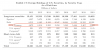
The figure I quoted in post #219 showed that the $$ amount of US securities held by foreigners increased from 2018 - 2019. I found a better source for information which lays out exactly the types of securities which include equities (which I didn't know so they're not really relevant to this debate) and I've posted the screen shot below. Note the steady general increase in US Treasury debt from 2012 - 2019.

Screen Shot 2020-07-26 at 4.38.06 pm.png

https://ticdata.treasury.gov/Publish/shl2019r.pdf

So foreign holdings may well be declining as a % of total debt on issue, but in actual $ amounts, it is increasing. Confidence in US Treasury debt therefore is not an issue for many investors.

This pre-covid pandemic but it looked like the trend was continuing in 2020.

Foreign holdings of U.S. Treasuries hit record high -data

https://www.nasdaq.com/articles/foreign-holdings-of-u.s.-treasuries-hit-record-high-data-2020-04-15

And thanks for the Real Vision, I'll check it out.
 
@leo25 Finally got to these. Thanks, very worthwhile. I listened to them while falling asleep but interviewer and interviewee were both first class. If people would listen to this sort of stuff instead of the fools that present themselves as experts there would be less misinformation out there. I intend to listen again giving my full attention.
 
Back
Top